
Phoenix asphalt hits 160°F in July. Pool decks are usually 20–40°F cooler than that — but the spread between materials is huge, and so is the spread in how each one ages.
Surface temperatures, real-world
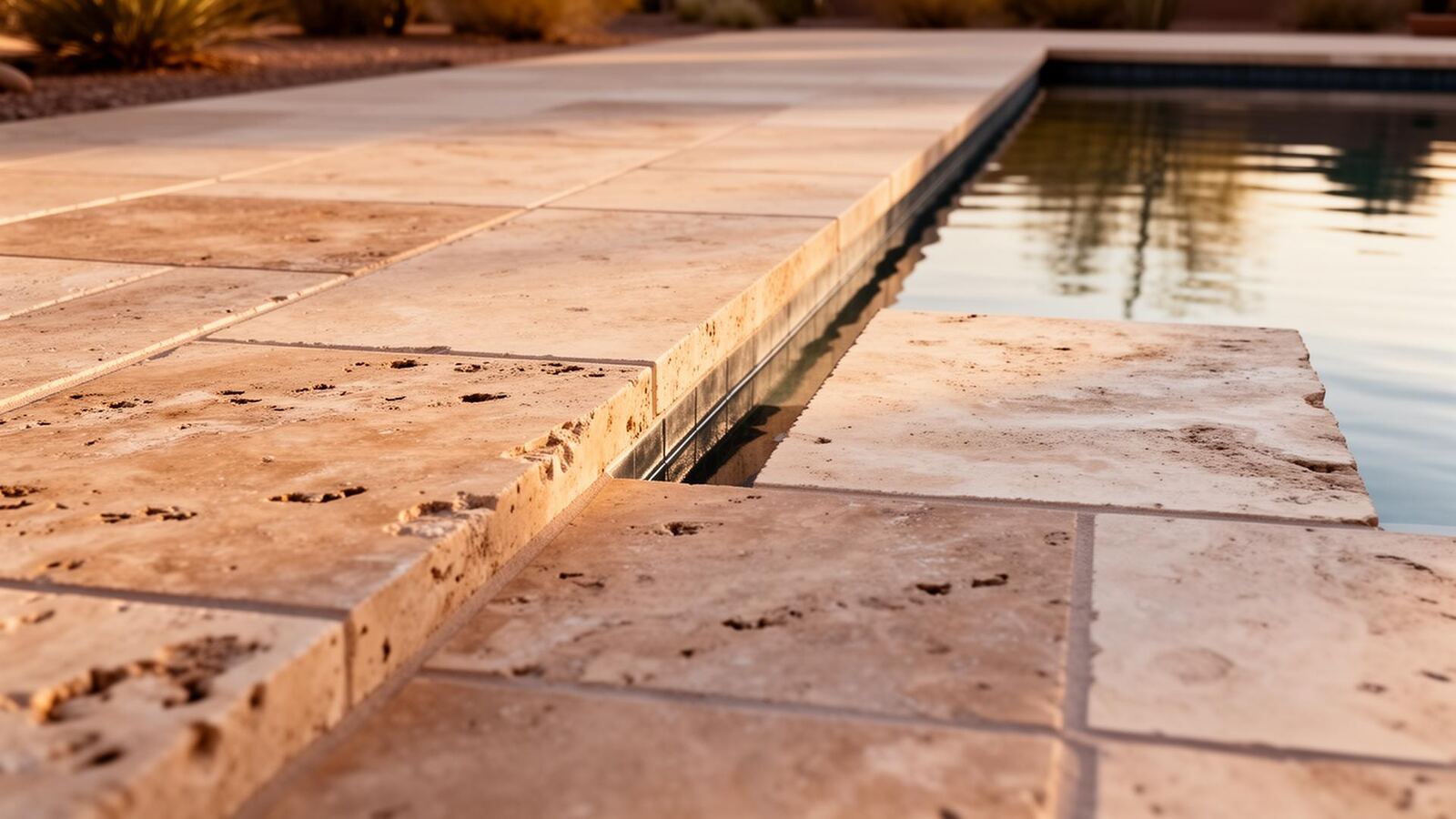
- Travertine: ~95–110°F barefoot-safe almost all day. Our default for pool decks.
- Flagstone (Buckskin / Arizona Rosa): ~105–120°F. Stunning, slightly warmer than travertine.
- Concrete pavers (light colors): ~115–130°F. Affordable, replaceable individually if cracked.
- Broomed concrete (light): ~120–135°F. Functional, never premium.
- Stamped & stained concrete (dark): ~140–155°F. We rarely recommend it for pool decks.
Cracking and ground movement
Caliche, expansive clay, and 50°F daily temperature swings move Arizona slabs. Poured concrete eventually cracks — the only question is where. Pavers and travertine flex with the ground, and individual pieces can be replaced without a saw-cut scar across the whole patio.
10-year cost, not day-one cost
Concrete is roughly half the up-front price of travertine. But by year 8–10, most concrete decks need acid-staining touchups, crack repair, or full overlay. We've ripped out countless "I'll just do concrete to save" patios and rebuilt them in pavers or stone. The cheaper material got expensive.
What AE installs and why
- Pool decks: Travertine (Ivory or Walnut), French pattern, set on a proper sand-leveled base.
- Driveways & entries: Belgard or Pavestone concrete pavers — replaceable, oil-stain-friendly.
- Accent patios & firepit pads: Buckskin or Arizona Rosa flagstone for that desert vernacular.
- Modern courtyards: Large-format porcelain pavers — the cleanest contemporary look.
The honest exception
Side yards, equipment pads, and utility paths where nobody walks barefoot? Broomed concrete is the right call. Premium materials belong where your family actually lives.